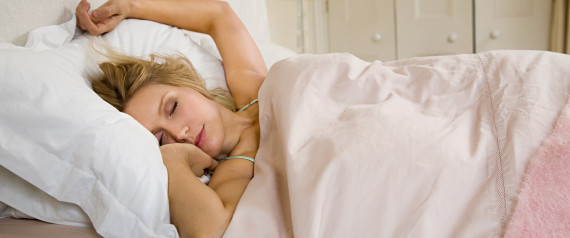
Most of us have probably met (and envied) at least one of those mysterious people who never seem to be tired. We've sized them up through bleary eyes, and wondered how it is that they don't look like they spent 30 minutes battling with the snooze button this morning. The answer isn't necessarily that they have the luxury of more hours to sleep; instead, many of the most well-rested have some simple habits that help them achieve plenty of high-quality rest.
One thing they often have in common? Discipline. The body likes routine, which allows your natural circadian rhythms to kick in. And while it can be tempting to answer one more email or stay for one last round of drinks, well-rested people prioritize sleep the same way they know to do for diet and exercise. "It's maintaining a regimented sleep/wake cycle and protecting one's sleep," says Michael Decker, Ph.D., a sleep specialist and associate professor at Case Western School of Nursing.
Decker and Joe Ojile, M.D., founder and CEO of the Clayton Sleep Institute in St. Louis, Mo., shared some of the most common traits among the bright-eyed and bushy-tailed.
They don't sleep in
People often obsess about bedtimes, but one of the most important things in establishing a healthy sleep pattern is sticking to a regular wake time (and seeking bright light first thing in the morning). A steady wake up call sets your circadian rhythms, or internal clock, helping you to feel tired at the right time in the evening. "When you need to go to bed at night is, to a large degree, determined by when you get up and when you get light in the morning," Ojile says. "Even some nights if you can't get to bed on time, you should get up at your approximately same wake time."
And, sorry weekend binge sleepers, but that includes Saturdays and Sundays. Dramatically altering your sleep and wake times on your days off can throw your body clock out of whack, a phenomenon experts call "social jet lag."[1] You might live in New York, but by Monday morning your body feels like it's traveled to California and back, disrupting your rhythms and setting you up for a week of bad sleep -- one you'll try to compensate for by oversleeping the next weekend, perpetuating a vicious cycle. (On top of that, research suggests "recovery sleep"[2] might not be doing your brain any good.)
The good news? Getting the right amount of sleep all week means you won't need to play catch up on the weekends. "You've already, in effect, paid the sleep piper throughout the week," Ojile says. "It's almost like a bill you have to pay every day. People who don't have to pay down their sleep debt over the weekend have all that time to do other healthy behaviors."
They check electronics at the bedroom door.
Almost everyone -- 95 percent of Americans, according to the National Sleep Foundation's 2011 Sleep in America Poll[3] -- uses some sort of electronic device in the hour before bed, and, according to a recent HuffPost/YouGov poll[4] , 63 percent of smartphone owners between the ages of 18 to 29 cop to falling asleep with their cell phone, smartphone or tablet in bed. But all that nighttime screen-time might be messing with our shuteye: Not only do 3 a.m. texts disrupt sleep, but our many gadgets -- TVs, laptops, tablets or smartphones -- emit light that can signal to the brain that it's daytime, or time to be awake.
"Artificial light exposure between dusk and the time we go to bed at night suppresses release of the sleep-promoting hormone melatonin, enhances alertness and shifts circadian rhythms to a later hour -- making it more difficult to fall asleep," Charles Czeisler, Ph.D., M.D., of Harvard Medical School, said in a statement[5] when the National Sleep Foundation's results were released.
On top of disruptive light, reserving the bed for sleep (and sex) helps the brain to associate hitting the mattress with going to sleep, something experts call a "stimulus response relationship," Ojile explains. When your bed doubles as a home office, on the other hand, the brain thinks of it as a place to think and ruminate, neither of which are conducive to drifting off. There are ways to set up your bedroom for sleep success,[6] but they certainly don't involve anything with a power button.
They nap strategically
Well-rested people know the value of a good nap. Done correctly, a midday snooze can optimize alertness, productivity and creativity[7] , and reduce stress. If you weren't able to achieve your optimal number of hours the night before, or if you're just dragging, a short nap can be exactly what your body needs to reboot. Ojile recommends capping your siesta at 30 minutes or so -- any longer than that and your body will move into the phases of deep sleep, leaving you groggier than when you started. The best time to nap is often between 2 and 3 p.m., when you have a natural biological dip. Catnapping too late in the afternoon or evening, though, can leave you tossing and turning long past bedtime, so don't fall asleep after 4 p.m.[8] And it's important to note that insomniacs who have trouble falling sleeping at night or staying asleep should typically skip naps altogether.
They move
Good sleep isn't just about what happens when you're lying down. People who engage in physical activity typically sleep better than those who don't. In fact, according to the National Sleep Foundation's Sleep in America poll, exercisers report better quality sleep than their sedentary peers -- more than 80 percent[9] of those who categorized themselves as vigorous exercisers reported having fairly good or very good sleep quality, compared to just 56 percent of those who said they didn't get any activity. Even a little movement helps: 76 percent of those who fit into the "light" exercise category reported fairly good or very good sleep quality. "Active just means getting up off the couch and doing something, it doesn't mean you have to be a marathon runner," Ojile says.
While typical sleep hygiene advice often includes not exercising too late at night, the poll actually found that people who exercised close to bedtime didn't report a difference in snooze quality compared to those who worked out earlier in the day. What to make of that? Ojile says if you're someone who can work out in the evening without it keeping you up, go for it. If it's problematic, move up your sweat session.
They think about sleep before sleeping
"You'd never work out without stretching first would you?" Decker says. "And sleep is the same way in that we need to go through a process to prepare ourselves."
It can be difficult for many people to go from 60 to 0 after a jam packed day. (If only we had "off" buttons!). About an hour or so before bed, it's important to prepare your body to sleep by powering down electronics and swapping them out for more soothing activities, such as reading a book or taking a bath[10] . Eventually, a regular nighttime routine can automatically send signals to the body that it's time to sleep.
They eat and drink the right stuff, at the right time
By now, we all know to switch to decaf in the afternoon to avoid counting sheep way past midnight. But other evening diet choices could be unwittingly keeping you awake, including chocolate, a big steak or even spicy foods[11] . On top of that, eating a big meal late at night can stimulate your metabolism to start working on overdrive, Decker explains, and as your metabolism wakes up, you do too. "Those people who are well-rested, their dietary choices prevent caffeinated drinks [and heavy dinners] at night," he says.
They pass on alcohol too. While that nightcap might help you drift off initially, researchers have linked it to disrupted sleep[12] later in the night.
They appreciate the value of sleep
Trying to push through the wee hours of the night on next to no sleep is a recipe for burnout, not productivity. Well-rested people don't resent the need to sleep, and instead accept it as an important key to optimal health and performance. "Look at sleep as a health-giving enterprise," Ojile says. "It's giving [people] all this great stuff effectively for free. It's the most cost effective health program there is."
Still not convinced? Consider this: sleep deprivation has been linked with a whole host of serious health issues, including increased stroke risk, obesity and memory loss.
But they don't obsess about it
On the flip side, worrying about drifting off is counterproductive, as anxiety and sleep don't mix. HuffPost blogger Christopher Winter explained in a blog post last year[13] :
The simple answer is often the individual who can't sleep is anxious about not sleeping. People fear many things: flying, heights, drowning, blood and bodily injuries, even death. Being awake is not a common fear. Most of us greatly enjoy being awake. Being awake is usually viewed as a good thing, just not when we are trying to sleep. When we are awake during a time we want to sleep, we get upset. We also get anxious about the consequences of not getting a good night's sleep and the impact it may have on the next day. So, by addressing this anxious reaction to not sleeping, we can prevent individuals from developing this circular response (can't sleep, anxious about not sleeping, even less likely to sleep, more anxious about not sleeping, repeat) and thus facilitate sleep.
Having one night of bad sleep? Instead of worrying about it, get up out of bed and do something relaxing until you feel tired.
Also on HuffPost:

References
- ^ experts call "social jet lag." (www.huffingtonpost.com)
- ^ research suggests "recovery sleep" (www.huffingtonpost.com)
- ^ 2011 Sleep in America Poll (www.sleepfoundation.org)
- ^ a recent HuffPost/YouGov poll (www.huffingtonpost.com)
- ^ said in a statement (www.sleepfoundation.org)
- ^ are ways to set up your bedroom for sleep success, (www.huffingtonpost.com)
- ^ alertness, productivity and creativity (www.huffingtonpost.com)
- ^ so don't fall asleep after 4 p.m. (www.huffingtonpost.com)
- ^ more than 80 percent (www.sleepfoundation.org)
- ^ such as reading a book or taking a bath (www.huffingtonpost.com)
- ^ including chocolate, a big steak or even spicy foods (www.huffingtonpost.com)
- ^ researchers have linked it to disrupted sleep (www.huffingtonpost.com)
- ^ explained in a blog post last year (www.huffingtonpost.com)
- ^ Send us a tip (www.huffingtonpost.com)
- ^ Send us a photo or video (www.huffingtonpost.com)
- ^ Suggest a correction (www.huffingtonpost.com)

0 comments:
Post a Comment